

Breath as a clinical tool, not a wellness extra
Beyond "Take a Deep Breath": Why One-Size-Fits-All Breathing Fails
Many people seek out breathwork having already "tried breathing." What they usually received was a standard, one-size-fits-all directive: take a deep breath, count to four, and relax.
While well-intentioned, this advice assumes every nervous system is starting from the same baseline. For someone in an active freeze state, forcing long, slow inhales can feel claustrophobic. For a system trapped in hyperarousal, forcing sudden stillness can trigger panic instead of peace. Standard cues often miss the mark—or actively aggravate a system still organized around survival.
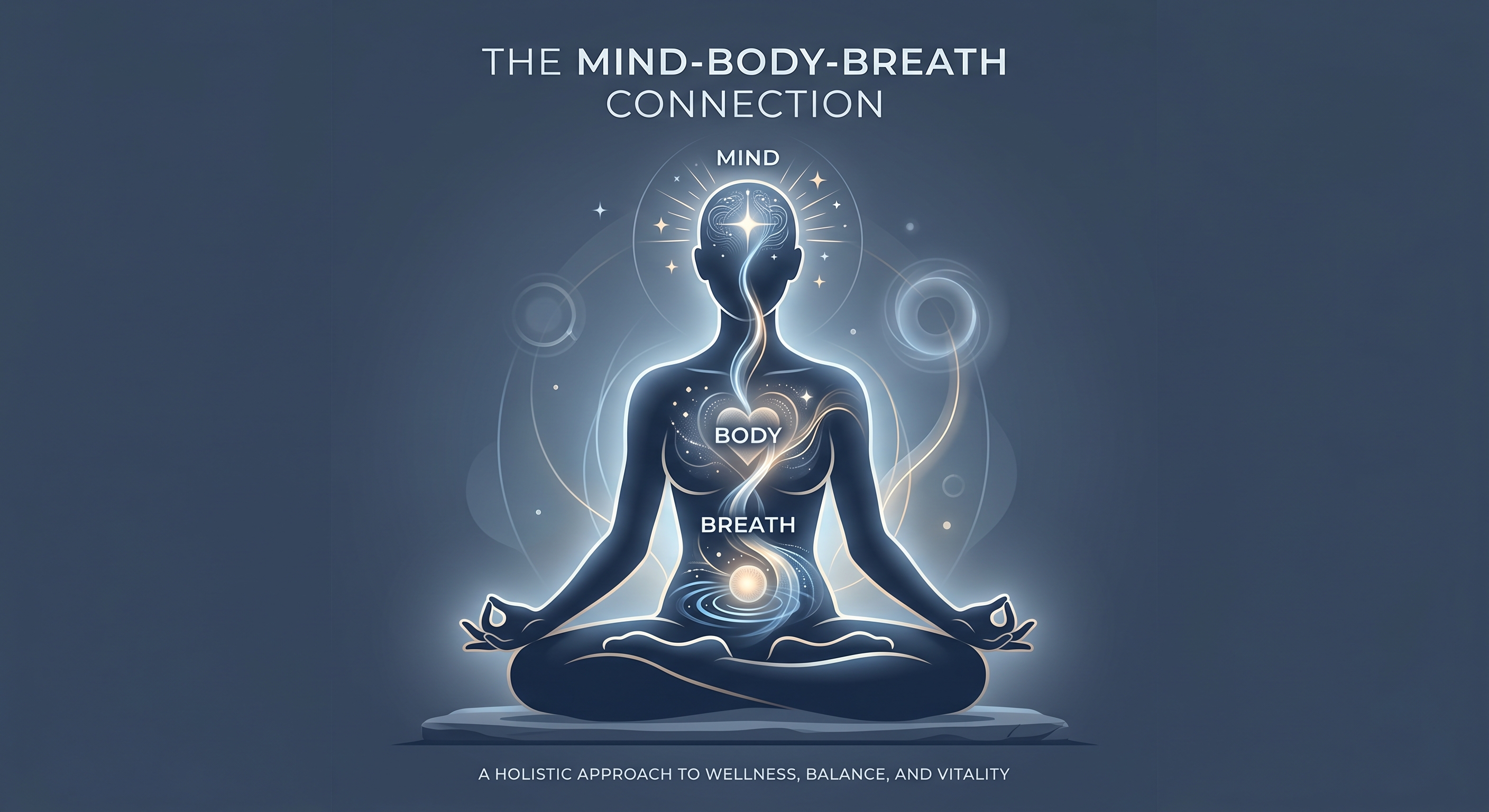
Effective, clinically grounded breathwork doesn't demand that you force your body into a prefabricated state. Instead, it uses the Mind-Body-Breath methodology to meet your physiology exactly where it is.
The Mind-Body-Breath Framework
- Mind: Orientation and Loop Identification
Before altering a single inhale, we start with orientation: What loop is currently active? Is the mind racing with anticipatory anxiety, or is it experiencing the fog of shutdown? Real safety isn't a cognitive choice; it’s a physiological assessment. We first map the current mental state to understand what the nervous system is trying to protect you from. - Body: Deciphering the Somatic Blueprint
Next, we ask: What would safety actually feel like in this body, today? Safety isn't an abstract concept; it is a physical experience of groundedness, muscular release, or visceral space. By tuning into physical sensations—tension in the jaw, constriction in the chest, heaviness in the limbs—we locate the physical anchors of your current state. - Breath: State-Matched Interventions
Once the mind and body are mapped, the breath becomes a precision instrument rather than a blunt tool:- For Hyperarousal (Sympathetic): Extended, unforced exhales with vocal resistance (like a soft hum) signal the vagus nerve to down-regulate without triggering air hunger.
- For Hypoarousal (Dorsal Vagal/Freeze): Gentle, rhythmic, movement-integrated inhales bring gentle energy back into the system without causing overwhelm.
Honoring the System You Have
This precise approach is why we train both practitioners and individuals. The underlying physiology of the nervous system doesn't change based on the setting; the same biological loops show up in trauma recovery, major life transitions, and the quiet, daily work of staying present.
The most powerful tools aren't the ones that work in theory. They are the ones that respect the nervous system you actually have today.
Which state does your nervous system tend to default to under stress—hyper-vigilance or shutdown—and how has standard breathing advice felt for you in those moments?