Journal

Notes from the practice

Reflections on breath, nervous-system safety, and returning to choice — for individuals and the clinicians who support them.

October 29, 2026 · Mind-Body-Breath

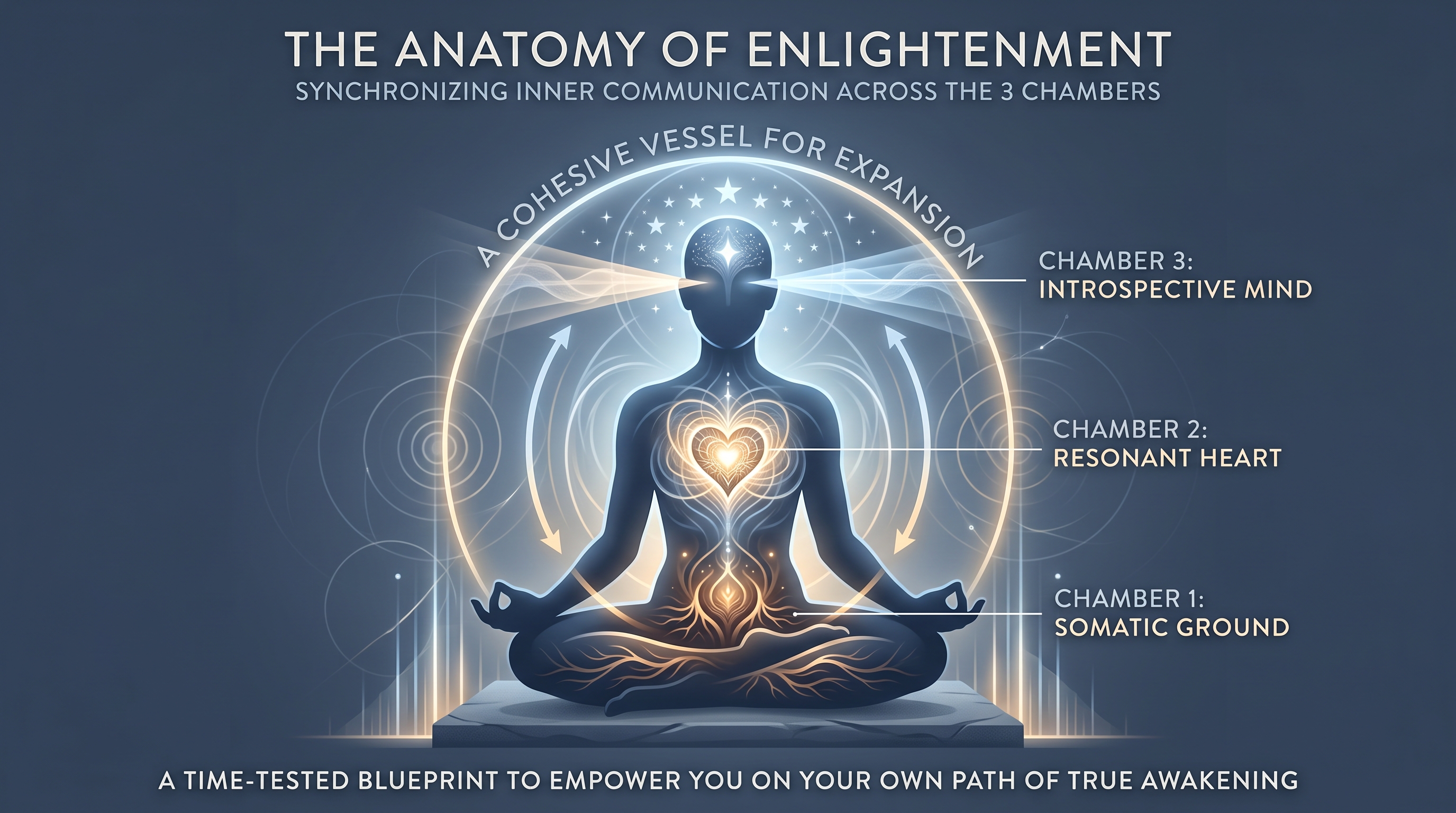
Sovereignty in the Search: Directing Your Awakening with the Anatomy of Enlightenment (AOE)

For many seekers, the word "enlightenment" sounds like a lottery ticket—an unpredictable stroke of cosmic grace, a sudden flash of lightning, or a mystical breakthrough reserved only for the lucky few. Spiritual spaces often treat awakening as something that only happens TO us, usually during an intense retreat or while sitting at the feet of an external master. But when the high of the spiritual experience fades, we are often left grasping, wondering how to recreate that expansive feeling in the middle of our everyday, messy lives.

Read article
October 27, 2026 · Mind-Body-Breath

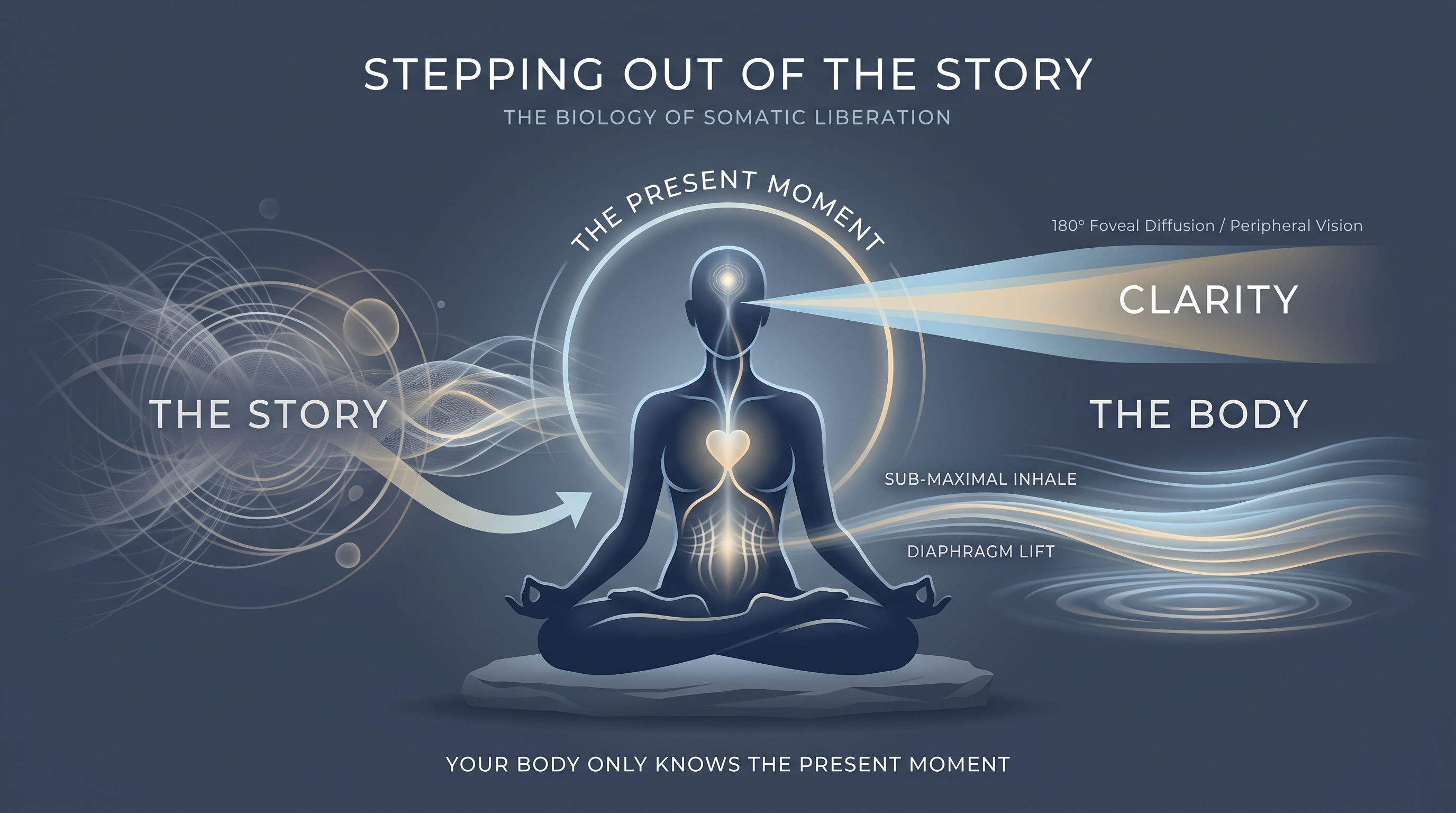
Stepping Out of the Story: Somatic Liberation through Real-Time Down-Regulation

When high-stakes life transitions, conflict, or daily friction strike, the human brain automatically defaults to survival mode. It narrows our visual focus, tightens our breath, and activates the Default Mode Network (DMN)—the neural circuit responsible for spinning mental simulations, catastrophizing outcomes, and projecting dangerous, virtual futures. In these moments, we are pulled completely out of reality and pushed into hypothetical timelines that force us into a reactive, defensive posture.

Read article

October 22, 2026 · Mind-Body-Breath

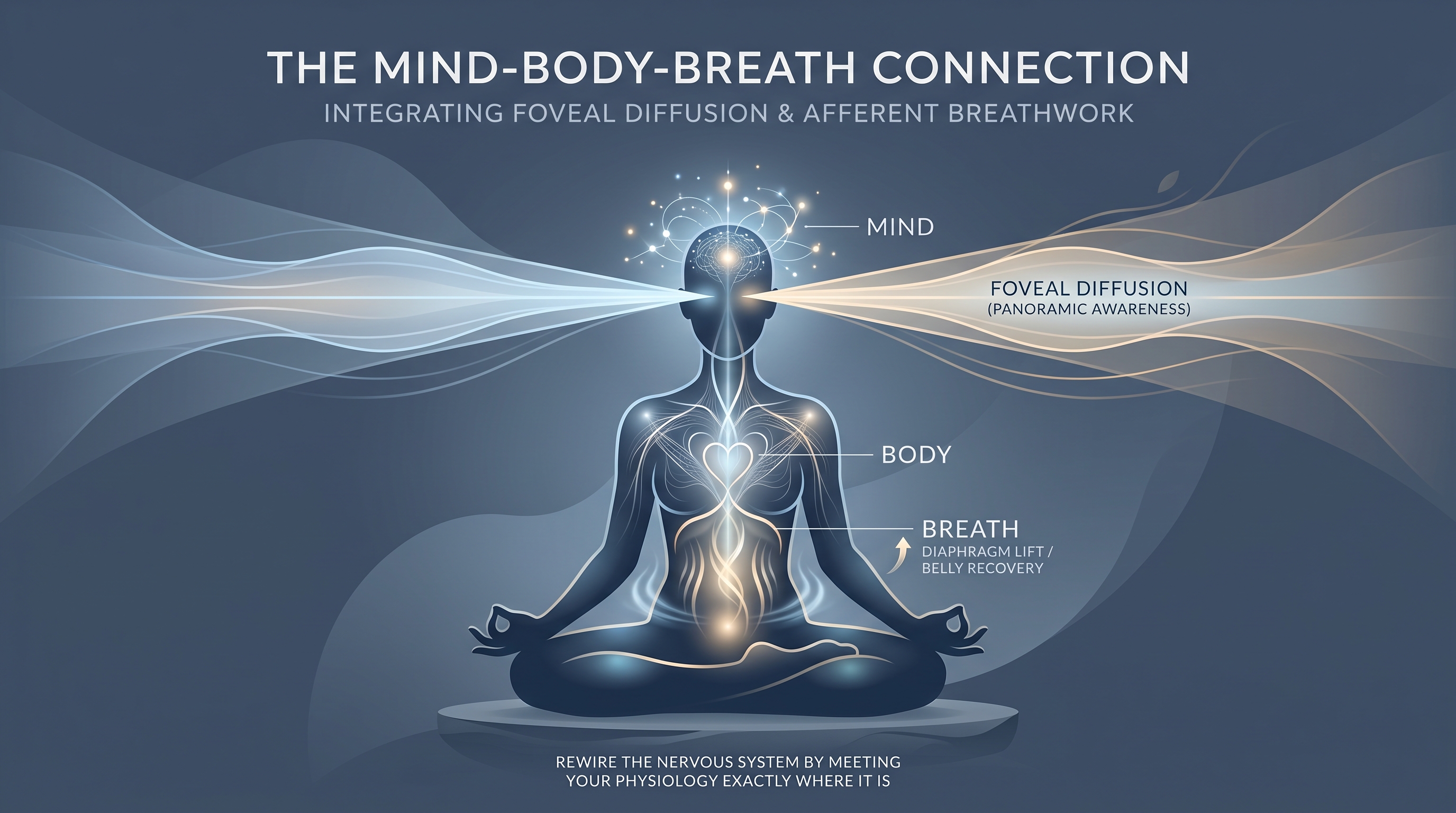
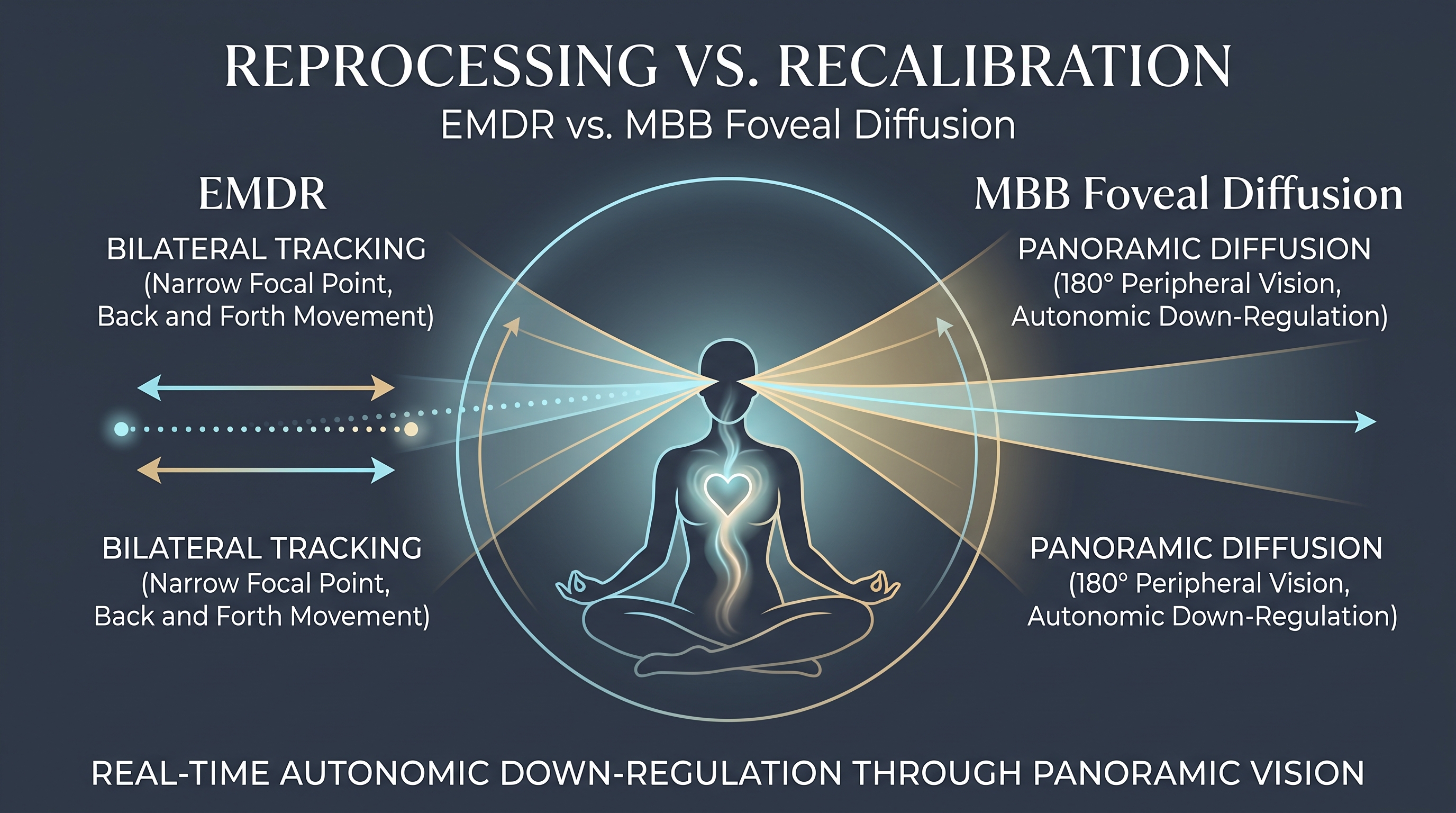
Reprocessing vs. Recalibration: EMDR and the Afferent Advantage of Foveal Diffusion

For decades, Eye Movement Desensitization and Reprocessing (EMDR) has served as a cornerstone of trauma therapy. By utilizing bilateral stimulation—typically moving the eyes side-to-side across the visual midline—EMDR helps the brain reprocess stuck traumatic memories. Yet many individuals who undergo EMDR or similar eye-tracking protocols discover a significant limitation: while the memory itself may become less emotionally charged over time, the body’s real-time threat response can still trigger when daily stress strikes.

Read article

October 20, 2026 · Mind-Body-Breath

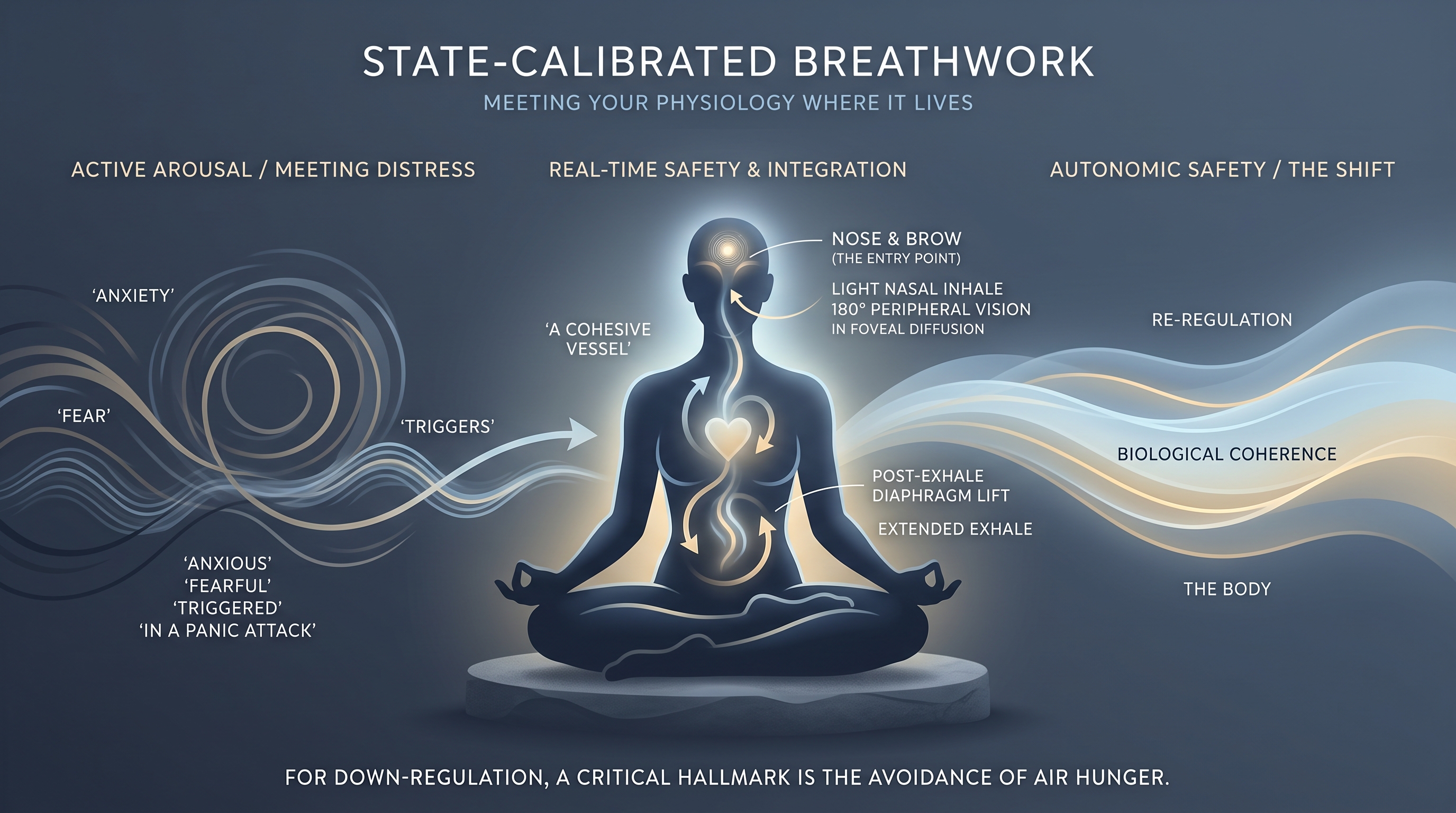
State-Calibrated Breathwork: Meeting Your Physiology Where It Lives

Mainstream breathwork trends often operate on rigid, unyielding rules: "breathe in for 4, hold for 7, exhale for 8," or execute hyperventilatory sequences to force catharsis. But when a human nervous system is locked in acute anxiety, a panic attack, or deep sympathetic arousal, imposing arbitrary counts or forcing deep, artificial breaths can backfire dramatically. Forcing intense respiratory demands onto a dysregulated body frequently spikes air hunger, heightens perceived threat, and drives the nervous system deeper into survival mode.

Read article

October 15, 2026 · Mind-Body-Breath

From Temporary Peak States to Real-Time Somatic Sovereignty

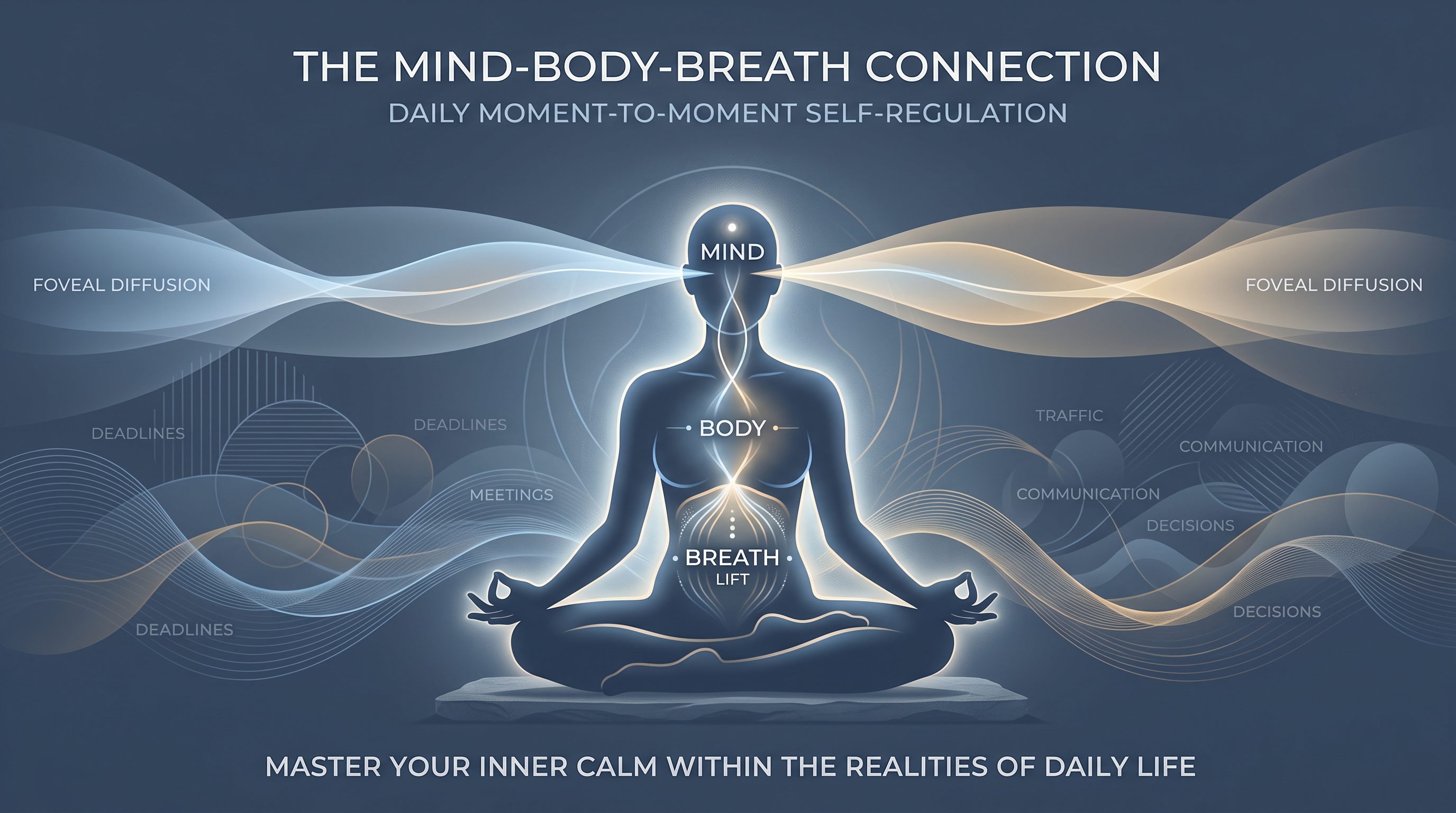
Immersive weekend workshops and deep retreat experiences have undeniable value. They offer dedicated space to disconnect, reflect, and experience profound moments of clarity, catharsis, or stillness. Yet many people discover that returning to daily life presents a distinct challenge: when Monday morning arrives with an unexpected deadline, traffic, or personal stress, holding onto that retreat state can feel nearly impossible. Part of this Monday-morning backslide occurs because generic, one-size-fits-all modalities can actually raise your sympathetic baseline—what felt like emotional catharsis in the room is often the nervous system retreating deeper into survival under physiological stress, rather than experiencing true down-regulation.

Read article

September 27, 2026 · Mind-Body-Breath

Beyond Stillness: How Afferent Intelligence and Breath Dynamics Rewire Your Nervous System

For decades, meditation has been taught from the top down—telling the mind to calm down while the body remains stuck in survival mode. The Mind-Body-Breath Method flips this paradigm. By integrating the body’s afferent sensory flow and honoring the vagus nerve’s natural 4:1 biological priority, we use targeted mechanical breath dynamics to quiet cognitive chatter, elevate our autonomic baseline, and tap into a broader field of intuition and creative agency.

Read article